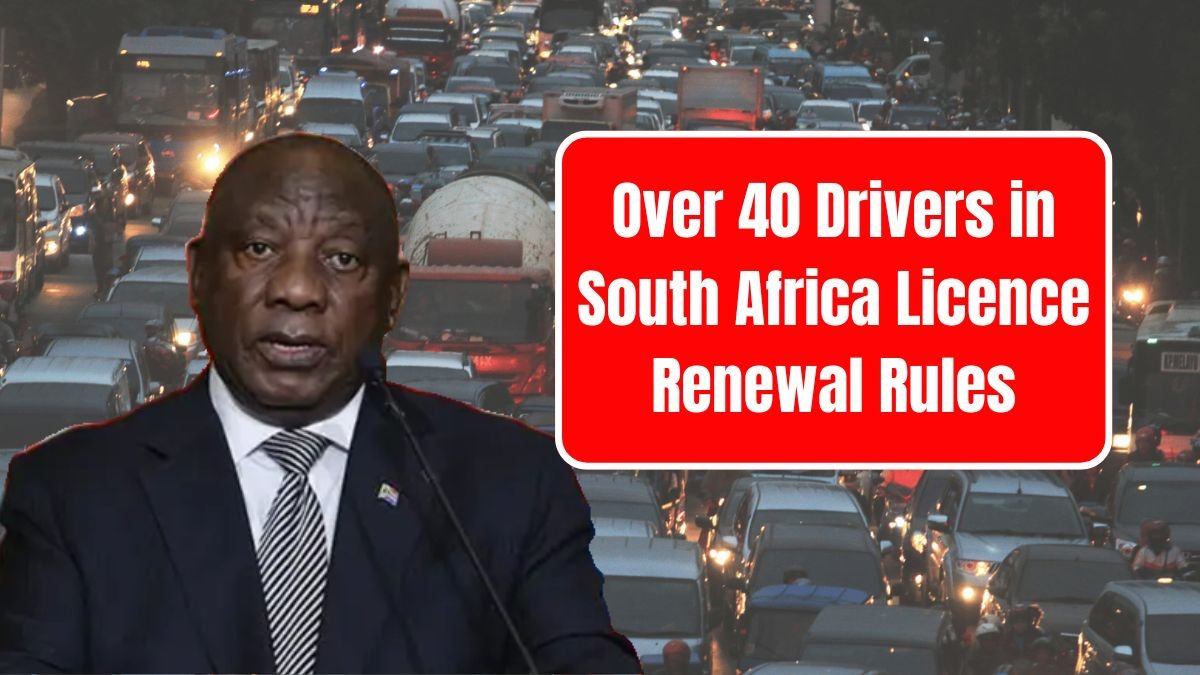
Just like that – come November 2025, South Africa will unveil a fresh driver’s licence renewal system for the over-forty age group. The Department of Transport has brought along a series of new regulations pertaining to eye testing, medical fitness and renewal time frames, which are to be the key factors for achieving road safety, all the while the country is facing an increasing number of driving accidents caused by age-related issues. The coming paragraphs will delve into the new regulation in detail, its consequences on the population and how to make the renewal process of your driver’s licence smooth and convenient.
Fresh Rules for Drivers over 40 Years
According to the new legislation, all drivers aged 40 and above will be required to have their driver’s licence renewed every five years instead of the current ten years. The move made by the Department of Transport is grounded on the necessity of regular health and vision checks which are vital and eventually become more important with age. Moreover, the above-mentioned drivers will need to give their consent except in cases where the test is conducted at a Driving Licence Testing Centre (DLTC) – to either yield a current eye test certificate from an optometrist or undergo the test at the end of the renewal process. With this plan, the bar for South Africa has been raised to that of other countries where there are frequent tests for the elderly drivers to determine whether they still possess the necessary driving skills for safe driving.
Revised Eye Test Standards
The switch over to the new eye test standard was a very great change. Henceforth, the RTMC (Road Traffic Management Corporation) will conduct eye test on all the drivers over 40 years of age and the ones who are able to meet the required standards will be the ones to hold their licenses just by passing the tests or not.
- Vision Standards: Your eyesight in both eyes (with or without corrective lenses) shall not be less than 20/40.
- Peripheral Vision: The minimum lateral field of view of both eyes is to be at least 70 degrees.
- Night and Glare Sensitivity: A driver will be subjected to glare recovery time test, so as to determine if the driver is fit for night driving. An ophthalmologist’s opinion that your vision fails to meet the minimum requirement will mean you cannot apply for a driver’s license until you have undergone the recommended course of eyeglasses, contact lenses, or treatment.
Medical Fitness and Additional Requirements
Forty and over drivers may have to sign a brief medical declaration pertaining to their eyesight as part of the license renewal. Affected by diabetes, high blood pressure or epilepsy, the driver will need to have a medical report from their doctor, certifying that their condition does not pose a risk for safe driving, prior to renewal.Taxi, bus, or truck drivers are categorized as professional drivers and therefore are liable for more rigorous assessments. Besides, they will also have regular physical and hearing tests that are part of the safety measures aimed at preventing accidents caused by driver fatigue, poor eyesight or slow response time, among others.
Where to Renew Your Licence and How to Do It
To renew your driver’s license, you have the option of going to the nearest DLTC center or using the online booking system on the RTMC’s NaTIS platform, which is the latter of the two methods. The following documents must be submitted by the applicant:
- A South African ID or unopened passport that is non-expired
- The active driver’s license card
- One has to provide proof of residency if their address is less than three months old
- Vision test certificate if it has been done outside the department
- The renewal fee must be paid, which ranges from R250-300 depending on the province.
- It’s always advisable to apply at least four weeks ahead of the license’s expiration to avoid fines and illegal driving situations.
Why These Changes Matter
According to the Department of Transport, accidents resulting from poor eyesight or slow reaction time are responsible for about 30% of the fatalities among drivers aged 40 and above. By implementing this new regulation, the authorities have shifted their focus towards protecting road users and consequently, the early detection of vision problems related to aging. They are playing a part in bridging the gap. Not only the safety on the roads will be enhanced as a result of regular eye and health checkups, but also the older drivers will be independent and will have confidence in their driving area.
also read: SASSA R350 Grant Payments For November 2025: Check Your Status And Payment Dates Now